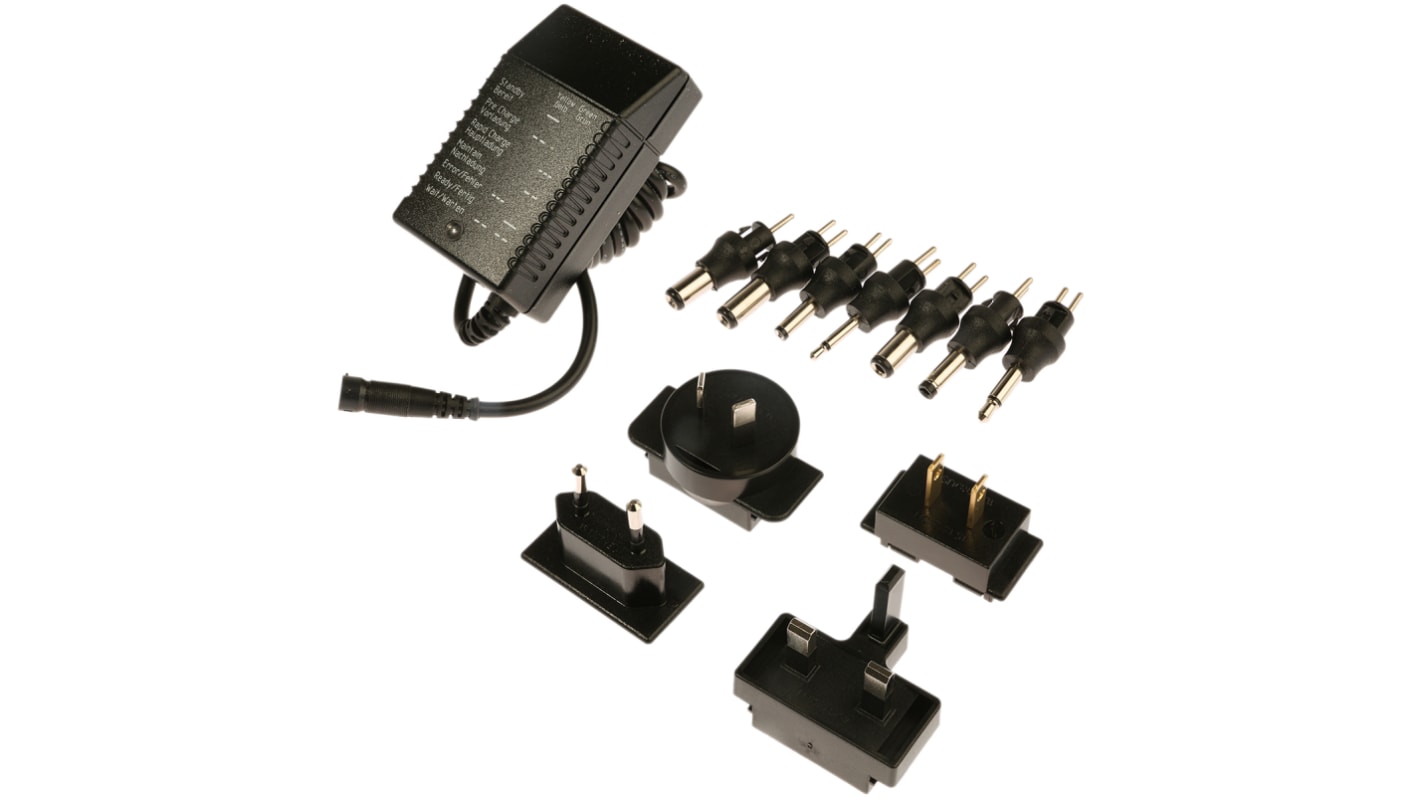
Friwo Battery Pack Charger For 12V, 4.8 V, NiMH, NiCd 800 mA, Battery Pack with Japan, IEC, AUS, Euro, US, UK plug, 4 to

Subtotaal (1 eenheid)*

€ 72,28

(excl. BTW)

€ 87,46

(incl. BTW)

Add to Basket
selecteer of typ hoeveelheid
Op voorraad
  • 6 stuk(s) klaar voor verzending
  • 75 stuk(s) klaar voor verzending vanaf een andere locatie
Heeft u meer nodig? Klik op 'Controleer leverdata' voor extra voorraad en levertijden.
Aantal stuks
Per stuk
1 +€ 72,28

*prijsindicatie

RS-stocknr.:
793-4329
Fabrikant:
Friwo
Zoek vergelijkbare producten door een of meer kenmerken te selecteren.
Alles selecteren

Merk

Friwo

Product Type

Battery Pack Charger

Output Voltage

12, 4.8V

Maximum Charge Current

800mA

Plug Type

Japan, IEC, AUS, Euro, US, UK

Compatible Battery Chemistry

NiMH, NiCd

Battery Charger Type

NiMH

Compatible Battery Size

Battery Pack

Compatible Number of Cells

4 to 10

Compatible Number of Batteries

1

Maximum Output Power

13.6W

Weight

140g

Number of Charge Stages

3

Standards/Approvals

2015/863, 2011/65/EU, IEC/EN 60335-1, IEC/EN 60335-2-29

Maximum Input Voltage

240V ac

Minimum Input Voltage

100V ac

Output Connectors

Push-On

Land van herkomst:
DE

RS PRO Battery Charger


RS 4-10 Cell NiCd/NiMH Charger

All Battery Chargers, also known as a recharger, have one thing in common. The charging protocol is the same. The Battery Charger is feeding an electric current through batteries for a specific duration time. Introducing the RS PRO Battery Charger that is suitable to charge different kinds of rechargeable batteries such as nickel-cadmium (also called "nicad" or NiCd) or nickel-metal hydride (also called "NiMH). The nickel-based battery type is the oldest, whereas the NiMH batteries use the newer technology and look the same as nicads. The Battery Charger is for the UK, EURO, IEC, JPN, and the USA. It is not recommended to charge the batteries overnight. Always check the charging time either on the battery (often in tiny writing) or check the current rating and set the charge time accordingly. The cleaning process for any Battery Charger is the same. To clean the charger, disconnect it from the power adaptor and use only a dry cloth. To ensure the correct function of the charger, keep the charging contacts free from dust and dirt.

Features and Benefits


  • Universal input 100 to 240 V ac with exchangeable primary adapters

  • Constant voltage, current limited

  • Exchangeable primary adapters

  • Low leakage current

  • Low standby power

  • LED charge indication

  • Continuously polarity protection

  • Battery Charger for NiCd/NiMH cells

  • The charger can be used in the UK, EURO, IEC, JPN, and the USA

  • Operating Frequency 50/60 Hz

  • Temperature Range 0 to +40 °C

  • Applications


    Rechargeable batteries can be used in many everyday items such as:

  • Medical applications

  • Diving lamps

  • Starter batteries

  • Mobile measuring technology

  • Professional photographic technology

  • Cleaning machines

  • Mobile lighting

  • Stairlifts

  • Electric vehicles

  • Attention


    Use only with NiCD/NiMH cells.

  • Non-rechargeable batteries or other types could cause an explosion!

  • Do not throw away any Alkaline batteries or different types of primary batteries

  • Do not dispose of batteries in a fire as the battery may explode, leak or catch fire

  • Frequently asked questions


    How long should you charge rechargeable batteries the first time?

    The best practice is to charge your batteries for about 14-16 hours before using it for the very first time. This process is called "initialising" and will provide the maximum battery capacity. It is advisable to leave the batteries to cool down before recharging.

    How to select the right battery charger?

    1. Firstly, you must choose a charger based on battery type

    2. Then it would be best if you found out what is the battery size

    3. Lastly, choose the correct charger based on the expected outcome.

    How do you dispose of a battery?

    Batteries should not be thrown away with regular rubbish, and if they contact other pieces of metal or batteries, it can be dangerous. Take these batteries to a collection site for household hazardous waste. For safe disposal cover the positive and negative terminals with duct or electrical tape before disposing of the cell.

    Safety Advice


  • Keep out of sight and reach of children

  • Do not connect batteries in parallel

  • Guidance


  • All batteries are supplied with only a residual charge and should be charged at the continuous charge rate before use - they are not pre-charged for use

  • Always install the batteries correctly as per instruction

  • Ensure that the contact points are clean and conductive

  • Do not mix different types of battery

  • Do not dispose of in a fire

  • Caution


    Do not connect batteries in parallel.

    Standards


    IEC/EN 60335-1;IEC/EN 60335-2-29

    Gerelateerde Links