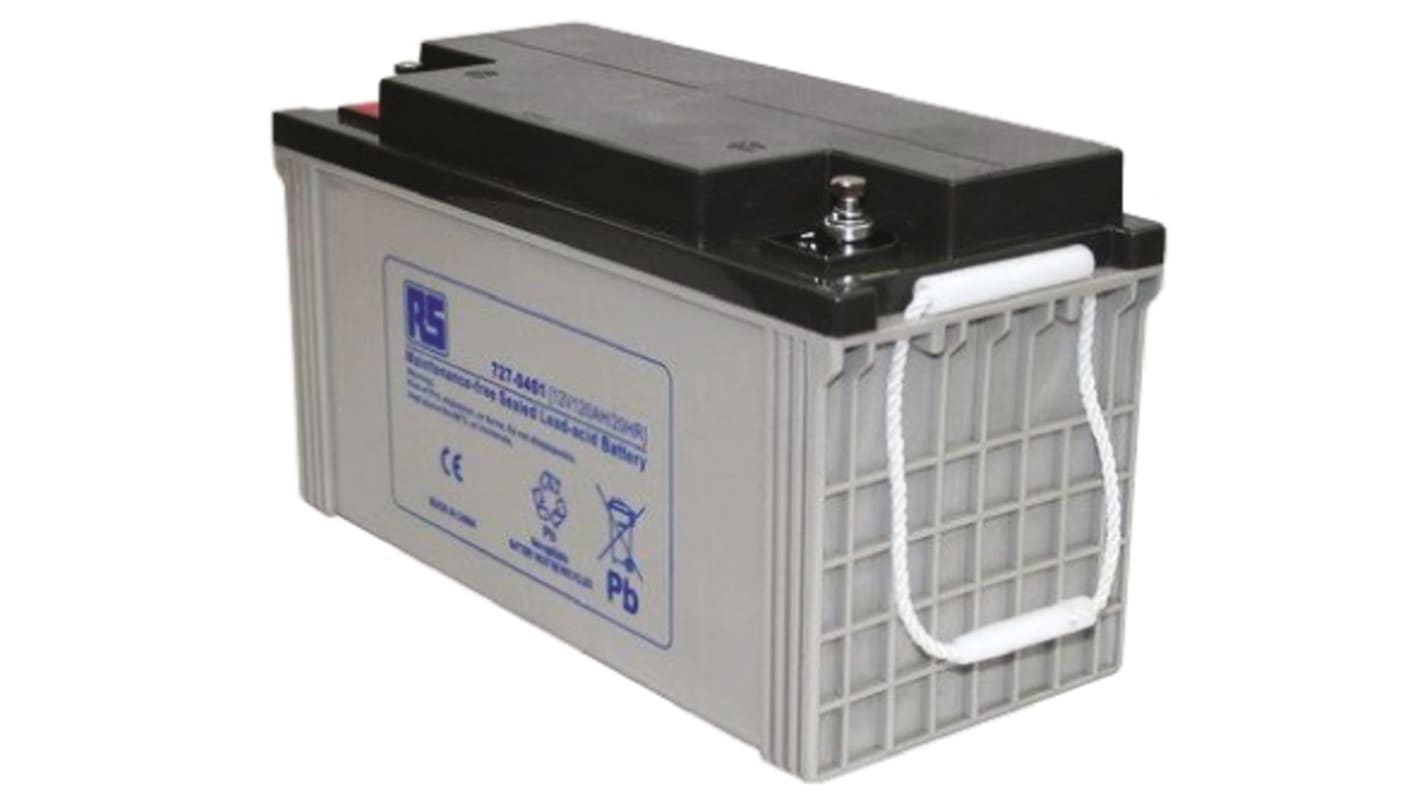
RS PRO 12 V, T11 Sealed Lead Acid Battery, 12 Ah, 225 mm x 408 mm
- RS-stocknr.:
- 727-0401
- Artikelnummer Distrelec:
- 304-24-460
- Fabrikant:
- RS PRO

Subtotaal (1 eenheid)*
€ 503,66
(excl. BTW)
€ 609,43
(incl. BTW)
GRATIS bezorging voor bestellingen van meer dan € 80,00
Op voorraad
- 6 stuk(s) klaar voor verzending
- 22 stuk(s) klaar voor verzending vanaf een andere locatie
Heeft u meer nodig? Klik op 'Controleer leverdata' voor extra voorraad en levertijden.
Aantal stuks | Per stuk |
|---|---|
| 1 + | € 503,66 |
*prijsindicatie
- RS-stocknr.:
- 727-0401
- Artikelnummer Distrelec:
- 304-24-460
- Fabrikant:
- RS PRO
Specificaties
Datasheets
Wetgeving en compliance
Productomschrijving
Zoek vergelijkbare producten door een of meer kenmerken te selecteren.
Alles selecteren | Attribuut | Waarde |
|---|---|---|
| Merk | RS PRO | |
| Battery Capacity | 12Ah | |
| Product Type | Sealed Lead Acid Battery | |
| Nominal Voltage | 12V | |
| Construction | AGM | |
| Flame Resistant | No | |
| Designed for Cyclic Application | No | |
| Eurobat Classification | 10 to 12 Years | |
| Termination Type | T11 | |
| Designed for High Rate Application | No | |
| Minimum Operating Temperature | 50°C | |
| Maximum Operating Temperature | 20°C | |
| Series | RS PRO | |
| Width | 225 mm | |
| Height | 408mm | |
| Weight | 34kg | |
| Standards/Approvals | No | |
| Alles selecteren | ||
|---|---|---|
Merk RS PRO | ||
Battery Capacity 12Ah | ||
Product Type Sealed Lead Acid Battery | ||
Nominal Voltage 12V | ||
Construction AGM | ||
Flame Resistant No | ||
Designed for Cyclic Application No | ||
Eurobat Classification 10 to 12 Years | ||
Termination Type T11 | ||
Designed for High Rate Application No | ||
Minimum Operating Temperature 50°C | ||
Maximum Operating Temperature 20°C | ||
Series RS PRO | ||
Width 225 mm | ||
Height 408mm | ||
Weight 34kg | ||
Standards/Approvals No | ||
Vrijgesteld
RS PRO Lead Acid Battery - Rechargeable
LP-Normal AGM Range
RS PRO Lead acid rechargeable battery which is suitable for use across a number of industries as well as for general purpose. This lead acid battery is sealed and has many uses. These long-life rechargeable batteries are ideal for their uninterruptable power supply (UPS) and emergency back-up.
RS PRO offers a range of Lead Acid Rechargeable Batteries with different voltages and chargers to suit all your requirements.
The range includes the following Lead Acid Battery with different Volts and ampere-hours capacity:
727-0382 - 6V, 7Ah
727-0385 - 6V, 3.2Ah
727-0388 - 6V, 1.2Ah
727-0391 - 12V, 20Ah
727-0394 - 12V, 35Ah
727-0398 - 12V, 100Ah
727-0401 - 12V, 120Ah
727-0408 - 12V, 55Ah
Features and Benefits:
Using oxygen recombination technology - maintenance-free
PbCaSn alloy for plate grids - less gassing, less self-discharging
High-quality AGM separator - extend cycle life and prevent micro short circuit
ABS material - increase the strength of the battery container. (Flame-retardant ABS is optional)
High purity raw material - ensures a low self-discharge rate
Silver-coated copper terminals (T1, T2 terminal), brass insert terminals and lead terminals improve the electric conductivity
Typical Applications
Automotive Industry
Aviation Industry
Golf Carts
Emergency Lighting
Medical Equipment
Wheel Chairs
Forklifts
Alarm and security system
FAQ's
What does SLA, VRLA mean?
SLA is short for Sealed Lead Acid battery. VRLA is short for Valve Regulated Lead Acid battery. Both of these batteries are the same with features such as maintenance-free and leak proof. SLA/VRLA batteries are also a type of AGM (Absorbed Glass Mat) batteries.
GEL Vs AGM Lead Acid Batteries
AGM (Absorbed Glass Mat) - These batteries contain only enough liquid to keep the specially designed glass mat wet. The glass mat is made to wick the battery electrolytes between the battery plates. If the AGM battery is broken no free liquid leaks out.
AGM batteries are preferred when a large number of amps are required. The life expectancy remains excellent in most cases if they are not discharged more than 60% between recharges and/or recharged fully every 3-6 months.
Gel Cell Batteries - These batteries contain silica type gel, which is a thick paste-like material. It allows the electrons to flow between plates, but will not leak in a gel battery if the case is broken.
Gel Cell Batteries don't offer the same power capacity as the same physical size AGM batteries. Gel cell batteries excel in slow discharge rates and slightly higher operating temperatures and with excellent deep cycle capability. Recharging these batteries must be done correctly or it will suffer premature failure.
Are Lead Acid Rechargeable Batteries Harmful?
Lead acid batteries contain chemicals that have the potential to be harmful to both your health and the environment. They contain lead which is a highly toxic metal and sulfuric acid which is a corrosive electrolyte solution. Proper handling procedures must be followed at all times.
How to dispose of Lead Acid Batteries?
These batteries do contain hazardous chemicals so recycling is the only way to dispose of them. Recycle responsibly, a wide range of schemes are available.
How long do Lead Acid Batteries take to charge?
A full charge can take up to between 14 to 16 hours.
Standards
UL94-HB
Gerelateerde Links
- RS PRO 12V T11 Sealed Lead Acid Battery, 120Ah
- RS PRO 12V T11 Sealed Lead Acid Battery, 100Ah
- RS PRO 12V T11 Sealed Lead Acid Battery, 150Ah
- RS PRO 12V T1 Sealed Lead Acid Battery, 5Ah
- Fiamm 12V Sealed Lead Acid Battery, 7.2Ah
- RS PRO 12V T1 Sealed Lead Acid Battery, 12Ah
- RS PRO 12V T12 Sealed Lead Acid Battery, 20Ah
- RS PRO 12V T12 Sealed Lead Acid Battery, 18Ah